Applying Scrum Principles in Home Renovation I: A Personal Journey

Agilar Team
02 Aug, 2024
tool
scrum mastery
tool
scrum mastery
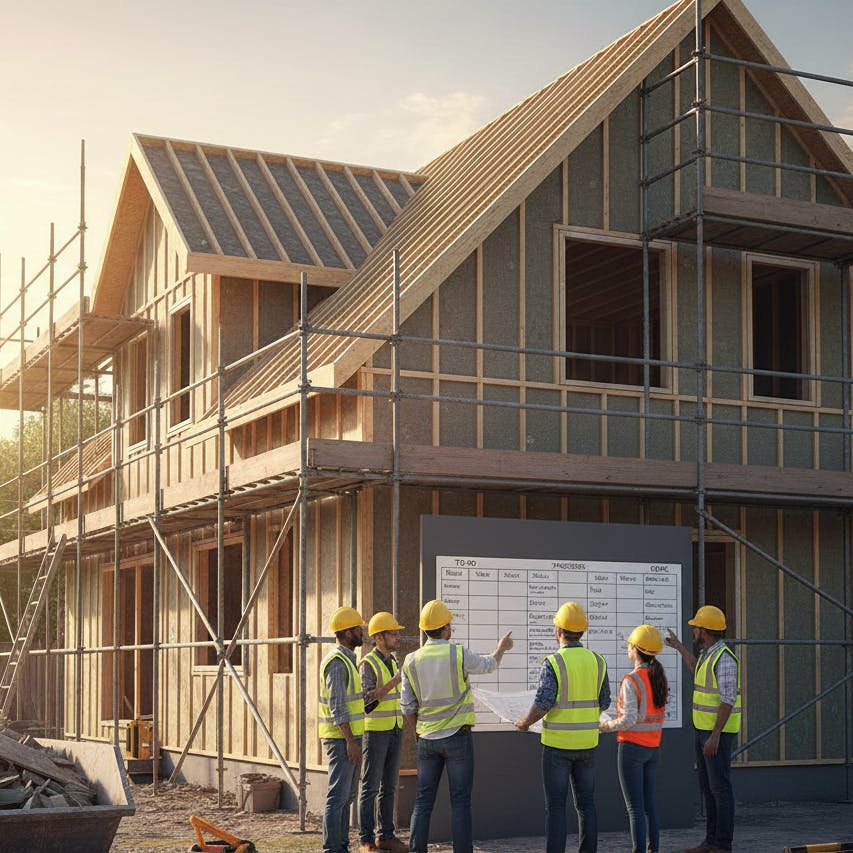
When most people think of Scrum and Agile, they picture software development teams and corporate environments. However, as an Agile Coach, I found that these principles are just as effective when applied to personal projects. In this article, I’ll share my journey of renovating my first house using Scrum principles. Whether you're an Agile enthusiast or simply curious about how these methodologies can be applied outside the office, I hope my experience will provide you with valuable insights.
The inspiration behind the renovation
My partner and I were on the lookout for our first home, and we wanted something unique and full of character. However, finding a house that met all our requirements within our budget proved to be a challenge. We realized that the best way to get what we wanted was to take on a house that needed some love and attention. Inspired by my colleague, Joke, who successfully renovated her old house using Scrum and Agile principles, we decided to embark on this adventure. This project became an opportunity not only to create our dream home but also to grow professionally as an Agile Coach.
Embracing flexibility and continuous learning
Before starting the renovation, our initial planning phase was short but crucial. We consulted with experts and talked to neighbors who had renovated similar houses. This helped us form a realistic view of what to expect and shaped our initial plans. However, we quickly learned that the ability to adapt was just as important as any plan.
In both renovation and Agile practices, flexibility is key. We’ve learned that being open to change based on what we discover during the process is essential. For instance, we might start with a specific plan for a room, but as we begin working, we uncover issues or new opportunities that prompt us to rethink our approach. This willingness to adapt isn’t just about being agile in the renovation; it's a mindset that I bring into my professional life as well.
The renovation has reinforced the importance of being flexible and ready to pivot when necessary—whether it’s in response to unexpected challenges or new insights. This flexibility ensures that we're always moving toward the best possible outcome, rather than rigidly sticking to a plan that might no longer make sense. It’s an approach I emphasize when coaching teams: the ability to adjust and refine plans based on real-world feedback is crucial for delivering the best results, both in renovation and in business.
Creating the backlog
One of the first tools we employed was Planning Poker, a technique commonly used in Agile teams to estimate the effort required for PBIs (Product Backlog Items). My partner and I used this exercise to break down the renovation into smaller, manageable tasks and discuss their complexity. This process helped us uncover discrepancies in our expectations and facilitated meaningful conversations about the scope of the work ahead. Although we didn’t use the Fibonacci sequence for our estimates, the exercise was invaluable in aligning our perspectives.
We also created a simple Scrum board with columns for "To Do," "In Progress," and "Done." This visual tool, prominently displayed in our home, became a central point of focus for everyone involved in the renovation, from family members to contractors. It helped ensure that tasks were completed before new ones were started, maintaining a steady and organized workflow.
Implementing scrum ceremonies in the renovation process
While we didn’t hold formal Scrum ceremonies, we naturally incorporated elements of retrospectives and daily stand-ups into our process. We regularly reflected on our communication with contractors, identifying areas for improvement and applying lessons learned to the next phase of the renovation. Although we didn’t have an official daily stand-up, our team would often gather around the Scrum board (or closet, in our case) to discuss the day’s tasks and plan our approach. This informal stand-up helped ensure that everyone knew what needed to be done and fostered collaboration among the team.
The interplay between renovation and professional life
One of the most interesting outcomes of applying Scrum principles to our renovation has been the way lessons learned on-site translate back into my professional life. While the renovation process itself is relatively straightforward compared to the complexities of software development, it serves as a powerful source of simple yet effective examples that I can use when coaching and teaching my teams.
For instance, in our renovation, a task like "wallpaper in the living room" led to confusion because the description wasn't specific enough. This clear, concrete example of miscommunication due to a vague task description is something I now frequently reference when working with teams. It illustrates the importance of clarity in writing user stories or PBIs, which can prevent misunderstandings and ensure everyone is on the same page.
In this way, the renovation project is not just a personal challenge where I apply my professional skills; it’s also a learning experience that continuously informs and enriches my approach to Agile coaching. The simplicity of home renovation tasks often strips down complex Agile concepts to their core, making them easier to understand and more relatable for the teams I work with. This bidirectional learning (where insights from renovation improve my coaching and vice versa) has been one of the most valuable aspects of this project.
Conclusion
Renovating our first home using Scrum principles has been an incredible learning experience. It not only helped us stay organized and efficient but also highlighted the effectiveness of Agile methodologies in non-traditional settings. The lessons learned from this project are ones I’ll carry with me in my role as an Agile Coach, applying them to both personal and professional endeavors. I hope this article inspires you to consider how Agile principles might benefit your own projects, whether at work or at home.